HRH Prince Turki AFaisal in Geneva: Global Peace and Stability Cannot Be Achieved Without Respect for International Law
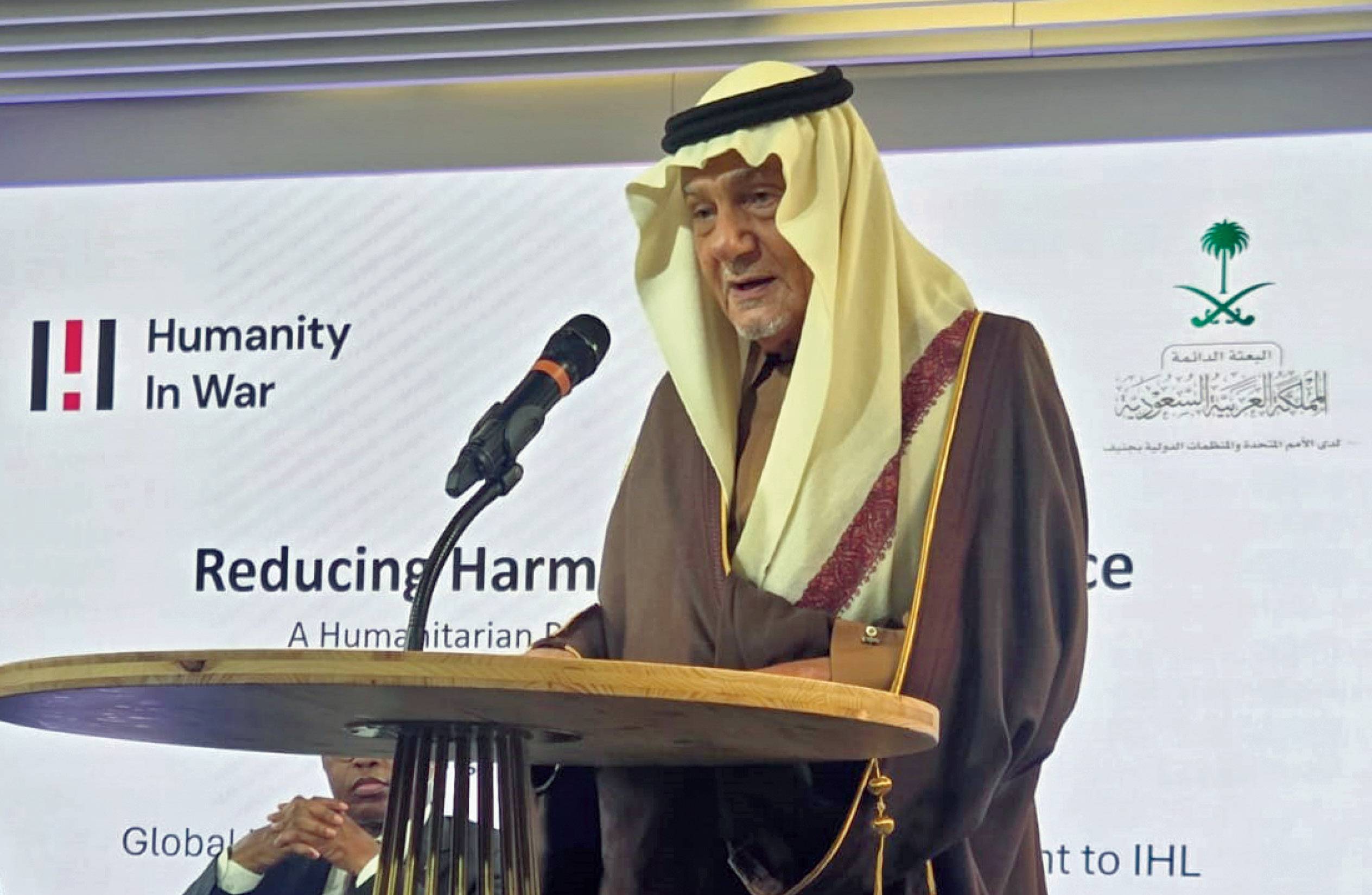
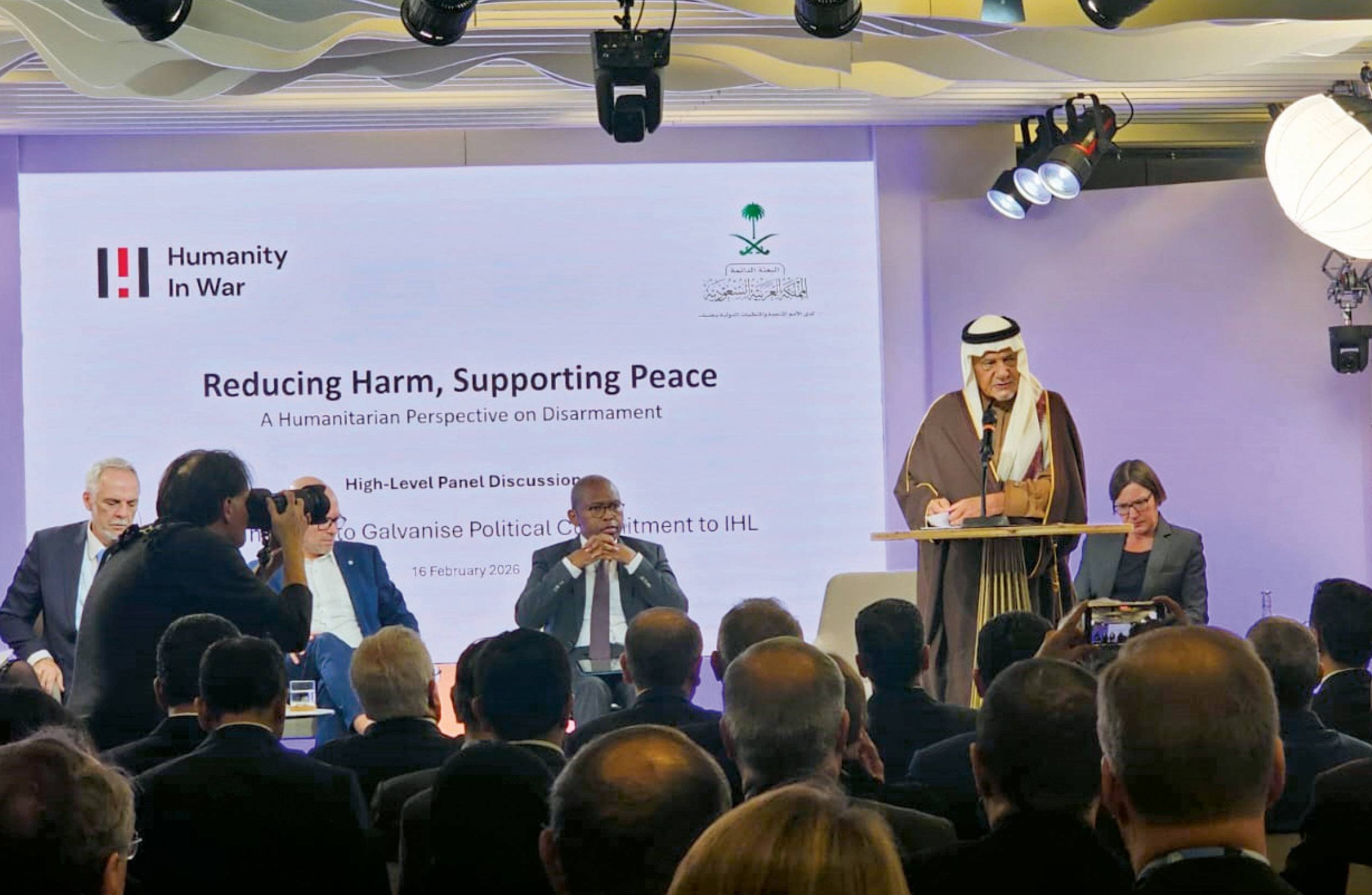
HRH Prince Turki AlFaisal, Chairman of the Board of Directors of the King Faisal Center for Research and Islamic Studies, delivered a speech before the International Committee of the Red Cross and Red Crescent in Geneva on Monday, February 16, 2026, addressing the challenges facing the global strategic landscape and their implications for international humanitarian law.
At the outset of his remarks, His Royal Highness expressed his gratitude to the Chairwoman of the Committee for the invitation, commending the organization’s efforts since its establishment in promoting peace and safeguarding international humanitarian law. He stressed that supporting these efforts “is not merely an international responsibility, but a duty incumbent upon all states that constitute the international community.”
He noted that the world is living in a “turbulent and unstable strategic environment,” and that humanity is passing through a phase marked by uncertainty regarding its future trajectory. He voiced hope that this period would not return the world to what the philosopher Thomas Hobbes described as the “state of nature,” characterized by a “war of all against all,” where chaos prevails and adherence to rules governing relations between individuals and states disappears.
Prince Turki explained that the international order established after the Second World War, despite its shortcomings, has for nearly eight decades prevented major wars among great powers and organized international affairs through various institutions addressing peace, health, education, conflict management, the environment, refugees, and development. It has also reinforced principles of sovereign equality, self-determination, and commitment to international law, including international humanitarian law.
He then addressed the current challenges facing the world, pointing to the decline in respect for international law and the rise of armed conflicts in various regions, accompanied by growing international polarization and a resurgence of power politics. Citing a statement by the Secretary-General of the United Nations, he affirmed that “when the law of force replaces the force of law, the consequences are profoundly destabilizing,” and that impunity fuels conflicts and undermines trust among states. “Global peace and stability cannot be achieved without respect for international law,” he added.
Prince Turki emphasized that recurring calls for a multipolar world order are not new; however, the issue is not merely the existence of multiple poles but rather the balance of power among them and the mechanisms for managing international affairs. He stated that the most appropriate solution lies in reforming the international system through restructuring the United Nations and its organs, particularly the Security Council, to enhance its representativeness, limit the obstruction of decisions through the use of the veto, and expand its membership to include states representing different continents, civilizations, and cultures.
Regarding the Kingdom of Saudi Arabia’s commitment, His Royal Highness noted that the Kingdom was among the first states to accede to the four Geneva Conventions and their Additional Protocols, and that this commitment “is consistent with the tolerant principles of Islamic Sharia, which call for mercy, justice, and humane treatment even in times of war.”
He added that in 2007 the Kingdom established a National Committee on International Humanitarian Law to oversee the implementation of its obligations, lead Arab initiatives aimed at strengthening the application and dissemination of this law, and coordinate with the International Committee of the Red Cross and Red Crescent.
He also highlighted the Kingdom’s hosting last year of the 18th Senior Workshop on International Rules Governing Military Operations in Riyadh, in partnership with the International Committee of the Red Cross and Red Crescent, with the aim of enhancing the application of international humanitarian law in military operations. He confirmed that the Ministry of Defense has incorporated the principles of this law into military education and training programs to ensure their practical implementation.
Prince Turki stressed that the Kingdom’s commitment is not limited to the military sphere, but extends to humanitarian and relief efforts carried out in conflict zones and disaster-affected areas around the world. He reaffirmed Saudi Arabia’s readiness to cooperate with states and relevant institutions to protect civilians during times of war and conflict.
He concluded by underscoring the importance of continued adherence to international humanitarian law at this critical juncture in the history of the international order, and of working collectively to avert the dangers of chaos and uncertainty that threaten global peace and stability.