HRH Prince Turki AlFaisal inaugurated the third edition of the Arab Narrative Days
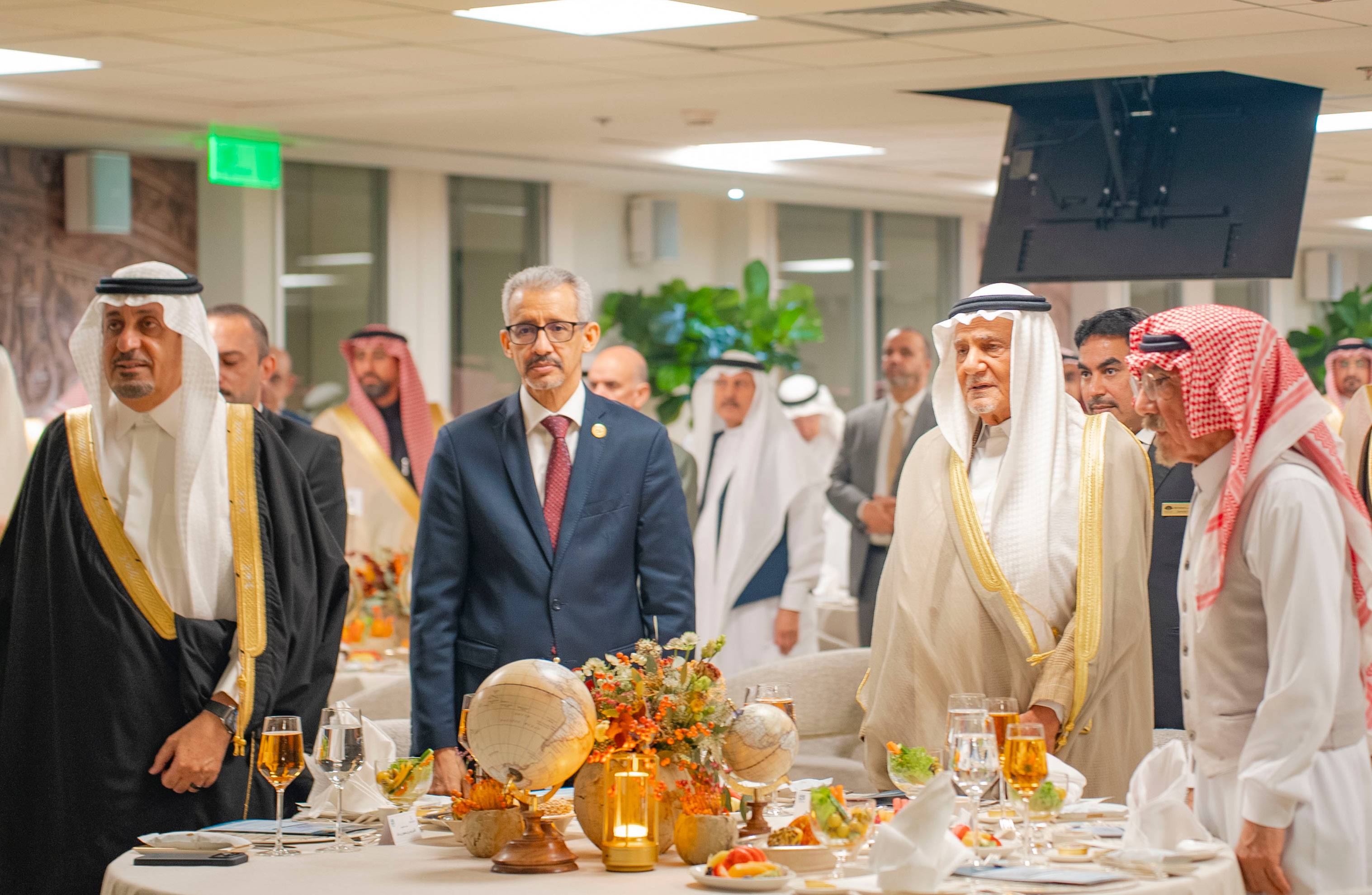
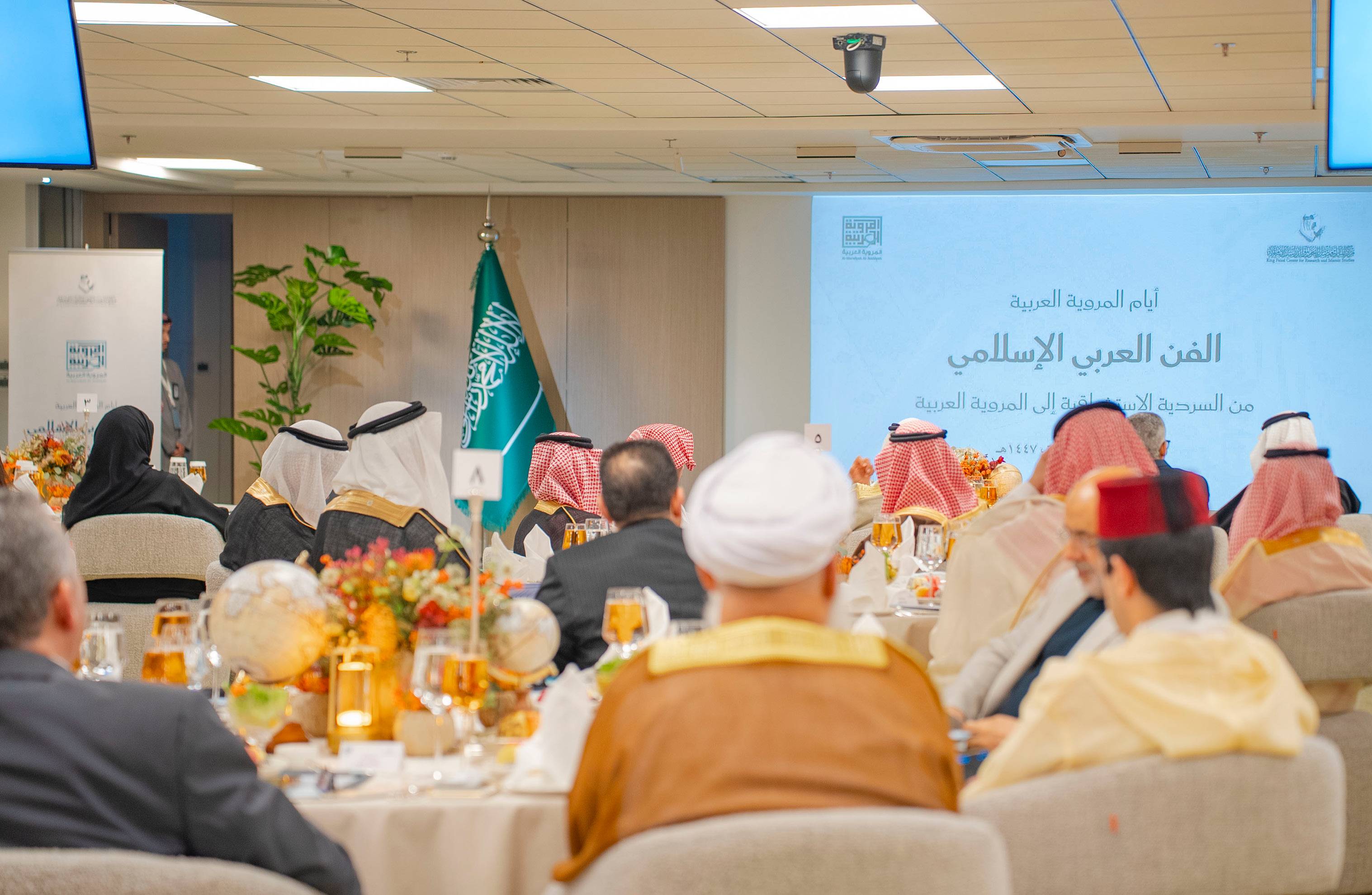
HRH Prince Turki AlFaisal, Chairman of the Board of Directors of the King Faisal Center for Research and Islamic Studies, inaugurated on Sunday, December 7, 2025, the opening ceremony of the third edition of the Arab Narrative Days, organized by the Center and held over two days. This edition comes as a continuation of an intellectual trajectory aimed at reconstructing the Arab narrative within a critical framework that restores the elements of strength in Arab and Islamic culture. It focuses on the foundations that shaped the Arab cultural and civilizational self, the frameworks through which the Arab understands himself, his history, and his society, and connects this trajectory with the Center’s research projects in heritage, thought, and the arts.
In his opening remarks, Prince Turki AlFaisal stated that the Arab aesthetic sensibility was born from “the silence of the Arabian desert, where the clarity of the horizon is the balance of the eye.” He noted that the first experience of beauty emerged from that early moment embodied in “a recited voice, a written word, and a direction by which directions themselves were defined.” He added that Arab and Islamic arts found their highest standard in the verse: “Indeed, We created man in the best form” (Qur’an 95:4), a principle that makes “the perfection of form” the basis for returning elements to virtuous proportions and a visual rhythm inspired by reason.
His Highness highlighted the foundational moment in which the Arabic language ascended with the advent of revelation, noting that “when the revelation manifested in the land of the Arabs and the horizon split to the voice of heaven, the measure of perception changed, and the language rose to a plane combining majesty and beauty.” This transformation, he explained, began with the revelation of the Qur’an, when “the Arabs were captivated by the enchantment of its eloquence,” and as the status of writing grew, “Arabic calligraphy became the vessel for the Word of God—Glorious and Exalted—marking the beginning of a deep and serene formation of Arab-Islamic art.” From these beginnings, the early Medinan scripts of the ‘Uthmanic codices emerged, proclaiming the birth of the craft of the sacred manuscripts—indeed, the birth of Arab-Islamic art—where writing, geometry, and ornamentation intertwined as tools revealing the depth of the Arab aesthetic experience.
Prince Turki emphasized that this art was never isolated from the world; rather, it absorbed the influences of the Persians, Romans, Byzantines, and Indians, then reshaped them within a unifying framework that neither dissolves difference nor excludes it. This framework extended to architecture, manuscripts, and textiles, where artistic dialects multiplied yet converged in one spiritual vision.
His Highness explained that the King Faisal Center has carried this vision since its founding, transforming its collections and treasures into an “Arab narrative” read through art and knowledge. Its exhibitions—from “Unity of Islamic Art” to “Asfār: Treasures of the King Faisal Center”—have become living experiences that interrogate history and reshape the public’s relationship with heritage. He affirmed that the Center’s cooperation with ALECSO reflects this vision and establishes a knowledge partnership that restores the Arab narrative through the programs of the Arab Narrative initiative.
Dr. Mohamed Ould Amar, Director-General of the Arab League Educational, Cultural and Scientific Organization (ALECSO), noted in his address the distinguished position of the King Faisal Center as a beacon of scientific research in the Arab world. He stressed that the convening of the Arab Narrative Days aligns with the Organization’s vision of preserving Arab heritage and safeguarding its presence in modern consciousness. He added that the project represents a pivotal step in reconstructing the Arab narrative on critical foundations that revive the Arabs’ civilizational presence through their scientific and intellectual history, linking creativity, language, identity, and paths of modernization.
This third edition builds on the first edition of the Arab Narrative initiative, held in February 2023, which focused on critiquing the classical narrative and elucidating the journey of knowledge transmission to and from the Arabs—affirming that reclaiming the civilizational role begins with the nation’s awareness of its history and identity. It also builds on the second edition, held in May 2024, which revisited the culture of the desert as the earliest memory in which language, imagination, and values were formed, drawing on the legacy of Bedouin studies and the efforts of its pioneers in documenting desert life and its cultural layers.
Through this continuous path, the third edition proceeds to restore and strengthen the Arab narrative in contemporary consciousness by building a bridge between heritage, scientific research, and the laboratories of art and knowledge—reaffirming the place of Arab culture within the global civilizational landscape.