HRH Prince Turki AlFaisal Discussed Global Transformations and Regional Challenges in a Meeting with Students of London Business School
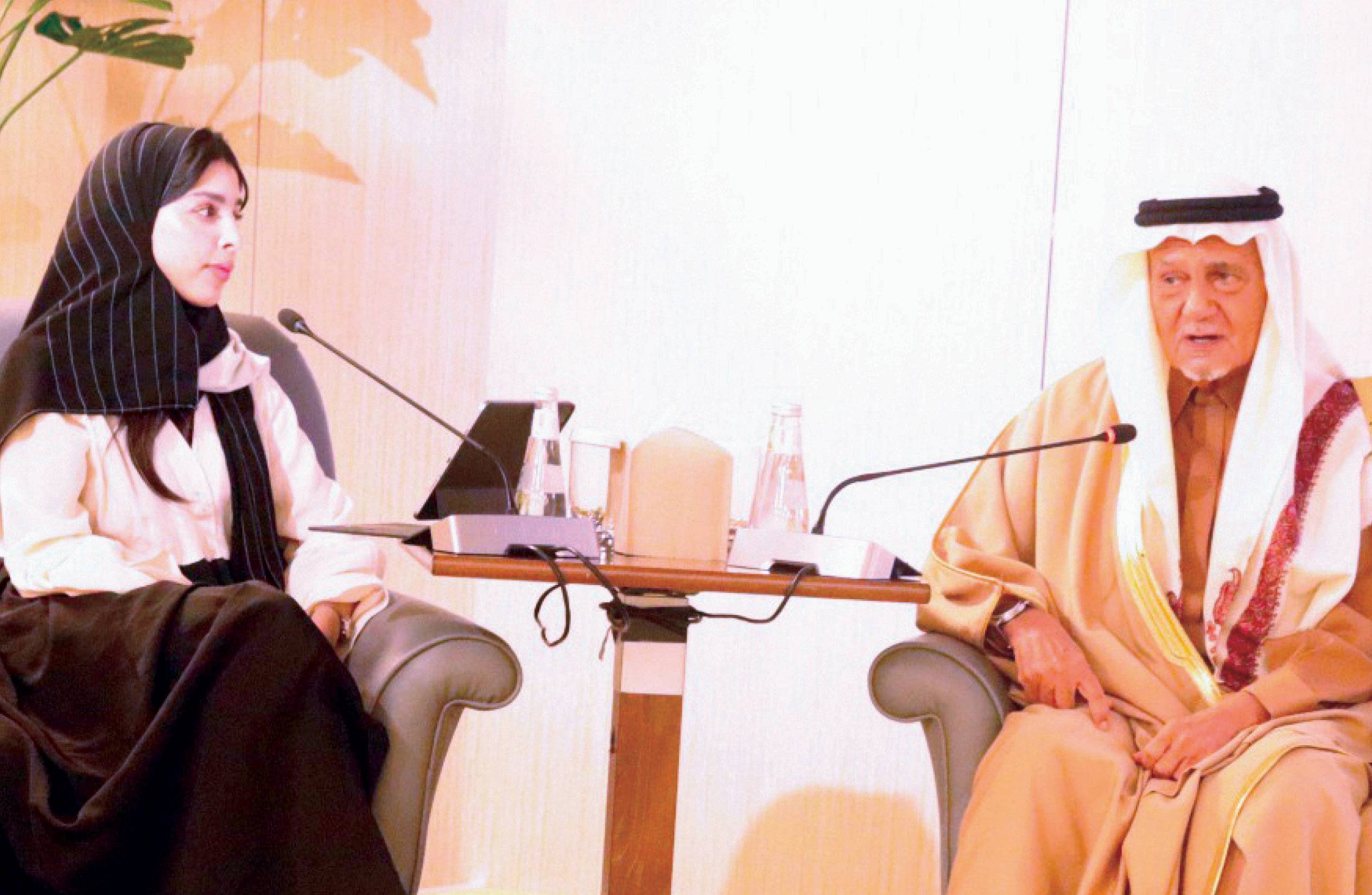
HRH Prince Turki AlFaisal, Chairman of the Board of Directors of the King Faisal Center for Research and Islamic Studies, met with a delegation of students from London Business School at the Center’s headquarters in Riyadh on Sunday, February 8, 2026, as part of an academic and cultural visit aimed at learning about the Kingdom’s experience in regional and international affairs.
The meeting addressed a range of issues related to transformations in the global order, international relations, and Saudi foreign policy, in addition to the role of public diplomacy, the future of energy, and the challenges associated with countries’ images in an increasingly polarized world.
At the outset of his remarks, His Royal Highness offered a historical reading of the Arabian Peninsula’s position in the global context. He explained that, for many centuries, the region had been a source of outward migration due to its geographical and climatic conditions. This trajectory changed fundamentally with the discovery of oil in the 1930s, when the Arabian Peninsula became a destination for migration and employment—an evolution that helps explain the contemporary demographic composition of the Gulf states.
He emphasized that understanding this historical context remains essential when discussing the region’s current conditions, particularly in light of surrounding regional flashpoints. He noted that Saudi policy, both domestically and internationally, has always been guided by the principle of safeguarding the Kingdom’s stability and social cohesion, while also seeking to contribute to de-escalating regional conflicts and addressing their root causes, foremost among them the Palestinian issue.
The discussion also touched on Prince Turki’s diplomatic experience during his tenure as Saudi Ambassador to both the United States and the United Kingdom. He observed that developments in communication technologies and changes in the nature of relations among political leaders have transformed the ambassador’s role—from a traditional political intermediary to an active practitioner of public diplomacy who engages directly with societies and public opinion.
In this context, he highlighted his commitment to participating in various dialogue platforms, from schools and universities to think tanks and public institutions, stressing that building mutual understanding can only be achieved through direct dialogue and openness to diverse audiences.
Prince Turki also addressed the nature of international relations amid the strategic competition between the United States and China, explaining that the Kingdom’s policy is grounded in advancing its national interests while maintaining balanced and complementary relations with major global powers.
He stated in this regard that the Kingdom “is keen to maintain good relations with both the United States and China, and views these relationships as complementary rather than contradictory.”
He further discussed prospects for energy and the future of oil in light of the objectives of Saudi Vision 2030, noting that oil’s role extends beyond being merely an energy source; it also underpins industries that are indispensable to modern life. He pointed out that diversifying sources of income does not conflict with oil’s continued importance as a key economic resource.
He explained that Saudi Vision 2030 is based on an awareness of the volatility of energy markets and the importance of building a diversified and more sustainable economy while making optimal use of natural resources.
In another part of the meeting, Prince Turki offered advice to younger generations and future leaders in a world marked by growing polarization. He emphasized that self-awareness and honesty in expressing one’s identity and values form the foundation for navigating challenges and building bridges of understanding.
He also addressed the issue of perception and misunderstandings affecting some countries in Western media, drawing on his experience in the United Kingdom. He underscored the influential role of media in shaping perceptions, while affirming that direct engagement with societies remains an effective tool for overcoming stereotypes.
In discussing how countries narrate their stories to the world, Prince Turki referred to China’s experience in repositioning itself internationally through culture, the arts, and scientific achievements, asserting that credibility and tangible accomplishment are the foundation of any successful global narrative.